Missed Meal Break Penalties in California: What Employers Owe
What a missed meal break costs in California: the one-hour premium, how it's calculated, waivers, records, and how to prevent violations with verified time data.
When a California employee does not get a compliant meal break, the employer generally owes one extra hour of pay at the employee’s regular rate for that workday. This is often called the meal penalty or meal premium. It is owed per workday, it counts as wages, and ignoring it can create further penalties. This guide explains when the premium applies, how to calculate it, what the records need to show, and how to prevent violations before they reach payroll.
Clock-me
Make Field Time Records Verifiable
Clock-me uses verified GPS clock-ins, identity verification, and geofencing to help managers monitor field-team attendance with live dashboards.
Relieved of all duty. Answering a radio, watching a job site, or covering the phones is duty.
Uninterrupted. A break cut to 20 minutes because a customer arrived is not a full 30-minute period.
Not discouraged. Tight schedules, a manager’s sigh, or a crew norm of “we eat in the truck while driving” can all amount to discouragement.
The flip side is also in the state guidance: an employer is not liable for premium pay if it provided bona fide relief from duty and did not discourage or coerce the employee into working. But if the employer knows or has reason to know the employee worked during the break, it must pay for that time.
That last phrase is where field teams get into trouble. If a supervisor texts a crew member at 12:15 and the crew member answers, the employer may now “know” about work during the break.
When the meal break has to happen
Timing is the most common technical miss. According to the state labor agency, the first meal period must be provided no later than the end of the employee’s fifth hour of work, and the second no later than the end of the tenth hour.
In practice, that means a break that starts at hour six is late, even if it lasts a full 30 minutes and the employee eats in peace. Late breaks are among the easiest to spot in time data and the easiest to miss without it.
A quick timing check
Shift event
What to check
Clock-in
Verified start time, not the scheduled one
Meal start
Begins before the end of hour five
Meal length
At least 30 minutes, uninterrupted
Long shifts
Second meal period begins before the end of hour ten, unless validly waived
It is per day, not per missed break. If a worker’s first meal period is late and the second is skipped on the same day, the state guidance describes the premium as owed for each workday in which a meal period is not provided. Count workdays with a violation, then confirm the specifics with your employment counsel for double-violation days.
Say a technician earns $28.00 an hour and works a nine-hour day with no meal period. The premium is one hour at the regular rate. If the base rate is the only pay component, that is $28.00. If the technician also earned a nondiscretionary production bonus that week, the regular rate may be higher, so the premium is too. Your payroll provider or employment attorney should run the regular-rate calculation for your pay structure.
Now multiply. Ten crew members missing a compliant meal period twice a week for a quarter adds up quickly, and that is before the extra penalties described below.
Why premium pay creates a second layer of exposure
Many employers treat the meal premium as a line item. California courts do not. In 2022 the California Supreme Court held in Naranjo v. Spectrum Security Services that premium pay for missed breaks constitutes wages. The consequence: failing to report these premiums on wage statements, or failing to pay them on time at separation, can result in additional penalties under California law.
So a single missed meal period can touch several things at once:
The premium itself.
Accuracy of the itemized wage statement.
Timely payment of final wages when someone leaves.
That is why the cleanest approach is not paying premiums well. It is not generating avoidable ones.
Meal breaks and pay: is lunch paid?
A common question from employees and managers: is the meal break paid? Generally no. California employers generally do not have to pay for meal breaks, but they must when the job requires the employee to remain on duty under a written agreement, or when the employer requires the employee to stay on-site in a way that keeps them from being relieved of duty.
That distinction connects directly to premiums. If an employee must stay at their post, the break may be an on-duty period, and unless the strict conditions are met, it is not a valid meal period at all.
Waivers and on-duty meal periods
California allows some flexibility, but the conditions are narrow.
On-duty meal periods. A paid on-duty meal period is permitted only when the nature of the work prevents the employee from being relieved of all duty and there is a written agreement the employee may revoke in writing at any time. Convenience does not qualify. “Our crew is busy at noon” is not the nature of the work.
If you rely on either arrangement, keep the signed document with the employee file and make sure supervisors know it exists. A waiver nobody can find is a waiver you cannot prove.
What changed in 2026
California lawmakers moved SB 693, which amends Labor Code section 512. According to the legislature’s bill text, it sets meal-period rules with exceptions for certain industries and employees, including employees covered by qualifying collective bargaining agreements. If your workforce is union-covered or in a named industry, read the current text of the statute with your counsel before assuming the general rules apply to you. For everyone else, the core framework above is the working baseline.
Records: the difference between a defense and a guess
The window is long. The statute of limitations for a wage claim for missed meal-period premium pay is three years. A claim filed today can reach back across several pay cycles, so your records need to be as good as the oldest period you might be asked about. Our guide on how long to keep timecards covers retention in more detail.
What good meal-break records look like
Verified clock-in and clock-out times tied to the person and the job site.
Meal start and end times, recorded at the moment, not reconstructed later.
A timecard attestation where the employee confirms they received their meal period, or flags that they did not.
A written process for what happens when someone flags a missed break: who reviews it, how the premium is calculated, and which pay period it appears in.
Office employees take lunch near a kitchen. Field crews do not. Landscapers, installers, drivers, home health aides, and inspectors work in places where timing depends on traffic, customers, and the next stop. Common causes of missed or noncompliant meals include:
Travel running long. The crew reaches the second site at hour five and a half, and the break slides.
Informal handoffs. A lead says “grab lunch when you can” instead of scheduling a window.
Edited timecards. Someone adds a standard 30-minute deduction whether or not the break happened. An automatic deduction with no confirmation is a weak record.
Buddy punching. A coworker clocks in or out for a colleague, so the data shows a break that never occurred, or hides one that did.
Unclear on-duty status. Staff on a client site are told to “stay nearby,” which may undercut the relief-from-duty requirement.
None of these are about bad intent. They are about missing visibility. A manager who sees a live view of who is clocked in, where, and for how long can step in at hour four and a half instead of discovering the problem in the payroll audit.
A practical prevention routine
You can cut most meal premiums with a short weekly routine.
Set the break window in the schedule. Put the meal start target before the end of hour five, and show it to the crew.
Capture real punches. Use clock-ins that confirm who is clocking in and where, so the time record is credible.
Prompt for attestation. At the end of each shift or week, have employees confirm whether they received a full, uninterrupted meal period.
Review exceptions daily. Late, short, or missing meal punches get flagged to a supervisor the next morning, not the next quarter.
Pay valid premiums promptly and itemize them. Given that premium pay is wages, show it on the wage statement.
Retrain supervisors. Managers who message crews during breaks create liability. If you onboard new managers regularly, a structured coaching cadence for new managers helps make on-duty meal-period rules and documentation habits part of their first 90 days.
Audit quarterly. Sample timecards against the rules above and fix patterns, not just individual cases.
We built Clock-Me around one belief: most meal break penalties are data problems before they are legal problems. When a manager cannot tell whether a break happened, the safe answer becomes a guess, and guesses get expensive at one hour of pay per workday.
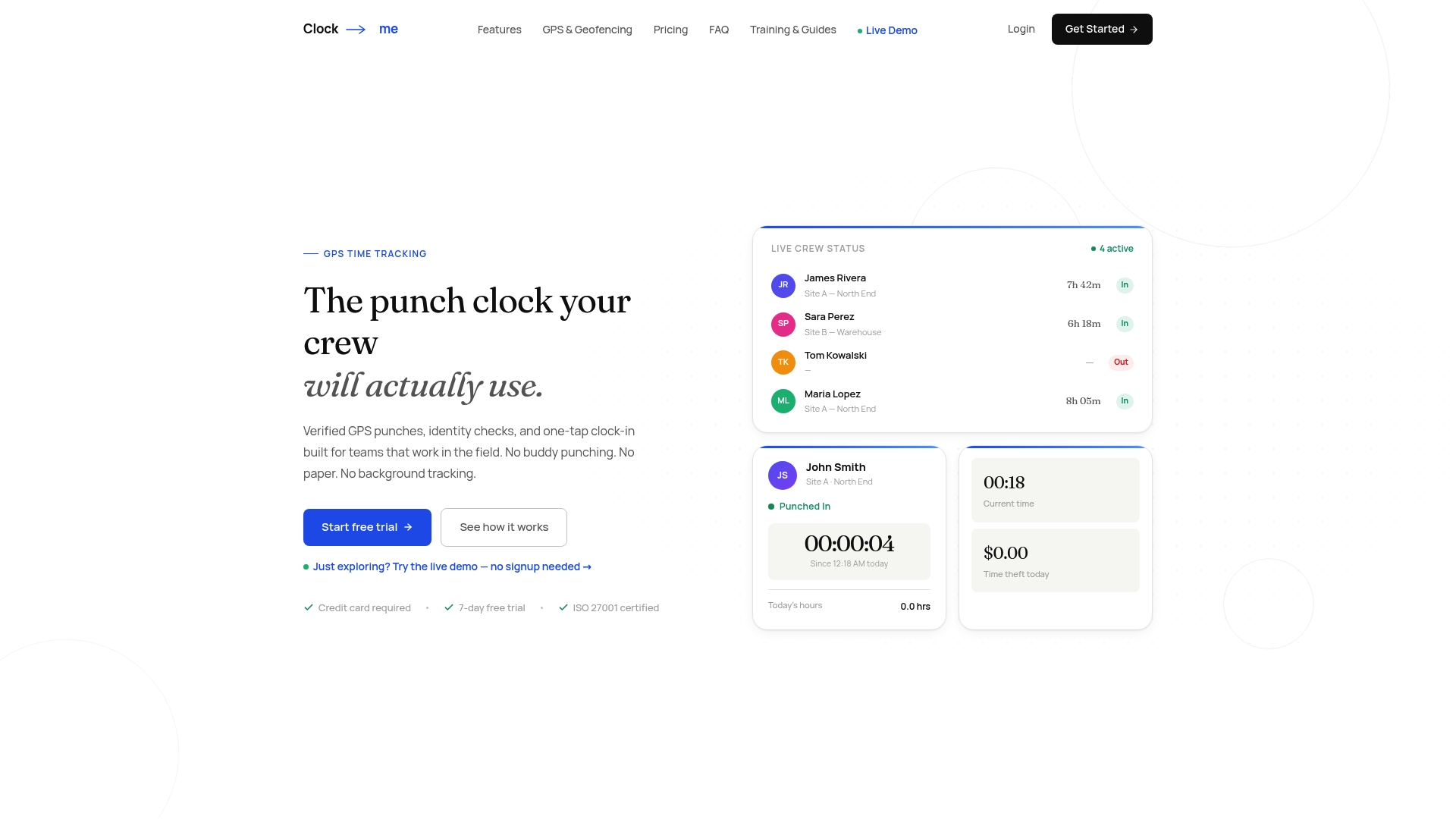
That is why we focus on verified GPS clock-ins, identity checks, and geofencing for field teams. Our approach is designed to make each punch trustworthy: the right person, in the right place, at the right time. Live dashboards let supervisors see who is approaching hour five without a recorded break, and timecard attestation gives employees a simple way to confirm or flag a missed meal period.
We also designed the product to work without paper timesheets or continuous background tracking. One tap clocks in. Managers get the visibility they need, and employees are not followed around all day. We think that balance is what makes compliance routines stick on a real crew.
Our California labor law compliance features exist because we hear the same story from employers: the rule was understood, but the proof was missing. Better records will not replace good scheduling, but they make it much easier to prevent the problem and to show your work when someone asks.
Clock-me
Put verified time data behind your meal break policy
Clock-Me gives field teams one-tap, GPS-verified clock-ins with identity verification, geofencing, live dashboards, timecard attestation, timesheet approval, and payroll export. Published plans run per month by number of active employees: Free at $0, Starter at $31.99, Growth at $54.99, Business at $99.99, Pro at $224.99, and Corporate at $439.99, with Enterprise pricing on request.
Small teams can start on the free plan and move up as headcount grows. See how it fits your crews at Clock-Me.
FAQ
How much is the California meal penalty?
It is one additional hour of pay at the employee’s regular rate of compensation for each workday a meal period is not provided. The regular rate includes hourly wages and nondiscretionary payments, so it can exceed base pay.
Can an employee waive a meal break in California?
Sometimes, if both sides agree. The first meal period can be waived when the total work period is no more than six hours, and the second when the work period is under 12 hours. An on-duty meal period needs a written agreement the employee can revoke at any time, and only applies when the nature of the work prevents relief from duty.
How long do employees have to claim a missed meal premium?
The statute of limitations for a wage claim for missed meal-period premium pay is three years. An employee can file with the DLSE or go to court, and time records or pay stubs help but are not required to start.
Is the meal premium treated as wages?
Yes. The California Supreme Court held in 2022 that premium pay for missed breaks is wages. Leaving it off wage statements or paying it late at separation can lead to additional penalties.
Do employers owe the premium if the employee chose to work through lunch?
Not if the employer provided real relief from duty and did not discourage or coerce the employee. But if the employer knew or had reason to know the employee worked, that time must be paid, so clear policies and accurate records matter.