buddy punching prevention
Buddy Punching Prevention: A Practical Guide for Managers
Stop coworkers from clocking in for each other. Learn the policy, verification methods and reports that prevent buddy punching on field teams.
Stop coworkers from clocking in for each other. Learn the policy, verification methods and reports that prevent buddy punching on field teams.
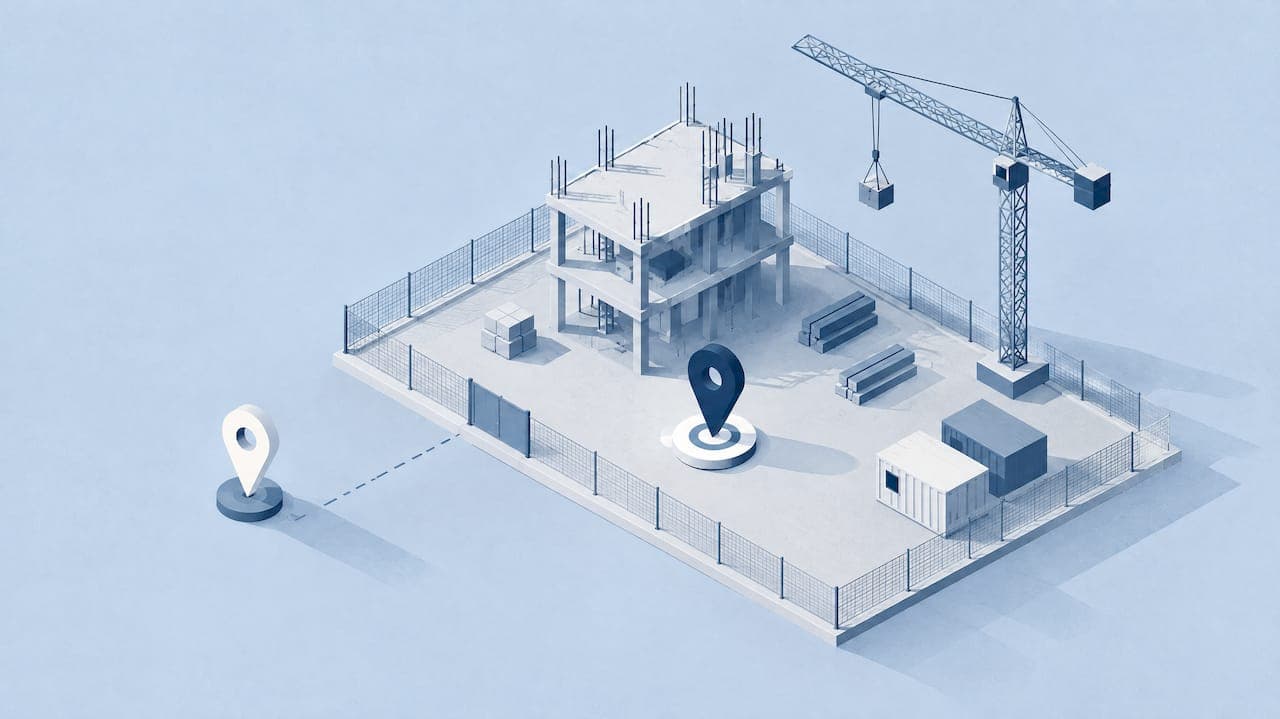
The most reliable way to stop buddy punching is to combine three things: a clear written policy, a clock-in that proves who is punching and where, and regular review of the data so odd patterns surface early. Any one of them alone leaves gaps. Together they make it hard to clock in for a coworker and easy to spot when someone tries.
This guide is for managers, HR leads and owners whose people work away from a single office. It covers what buddy punching is, why it happens, what to put in a policy, which verification methods fit field work, and how to judge an anti-buddy-punching app before you buy.
Buddy punching is when one employee clocks in or out for a coworker who is late or has left early, so the coworker appears to be at work when they are not. AIHR describes it as a type of time theft that can lead to payment for hours not officially worked.
It is rarely a dramatic scheme. It usually starts as a favor: “Can you tap me in? I’m stuck on the highway.” The first time feels harmless to both people. The cost shows up later, in payroll that does not match the work, in overtime that was never earned and in resentment from the crew members who do show up on time.
Understanding motive helps you prevent it, not just catch it. A 2024 peer-reviewed study on employee time theft groups motives into three kinds:
The other-oriented motive is the one buddy punching fits most naturally. People do it because someone asked, and saying no feels unfriendly.
Workplace conditions matter too. AIHR lists fear of reprimand or lost pay, disinterest in work, unhappy staff and stringent or unfair attendance policies as contributors. A 2025 study of 330 employees found that work-related contact outside normal hours was linked to time theft through revenge motives, especially where the relationship between employee and leader was weaker.
The practical lesson: if a crew has a lot of lateness, harsh penalties for a few minutes of tardiness and little trust in the supervisor, buddy punching will find room. Controls work best when paired with fair rules and a supervisor people can talk to.
It is dishonest, and most employers treat it as grounds for discipline up to termination. Whether it breaks a specific law depends on the facts and the state, so ask your attorney how it applies to a particular case. What matters for managers is what the law expects of you as the employer.
The Fair Labor Standards Act requires employers to keep records of wages, hours and other items. According to the Department of Labor’s Handy Reference Guide to the FLSA, those records do not need to be in a particular form, and time clocks are not required. The federal recordkeeping rules in 29 CFR Part 516 list hours worked each workday and total hours worked each workweek among the items you must keep.
That is why inaccurate punches are your problem even when the employee caused them. If your records are wrong, you are the one holding them. Texas Workforce Commission guidance notes that when an employer fails to keep accurate time records, an employee’s own log of hours is generally treated as the best evidence of time worked in a dispute. Reliable records protect you in both directions.
If you operate in California, wage and hour rules are stricter than the federal baseline in several areas, and accurate daily records matter even more. Have counsel confirm your timekeeping and attestation practices.

Technology catches fraud. A policy sets expectations before it happens. Keep it to one page, written in plain language, and make sure every new hire sees it on day one.
Talk through the policy in a crew meeting rather than just emailing it. Explain the reason in terms of fairness: everyone is paid for the hours they work, and nobody subsidizes someone else’s lateness. Then enforce it evenly. One quietly ignored incident teaches the whole team the rule is optional.
For a deeper look at building the policy side first, see our guide on time theft prevention for managers.
Paper sign-in sheets and shared kiosks make buddy punching easy. Field teams have it worse: there is often no supervisor on site to see who actually arrived. These are the controls that close the gap.
A GPS-stamped punch records where the phone was when the employee clocked in. If a crew member is at home while their coworker taps “clock in” at a job site, the mismatch shows up. GPS does not prove who held the phone, so it works best alongside identity checks.
A geofence is a virtual boundary around a job site. The employee can clock in only when inside it, or a punch outside the boundary is flagged for review. It is a simple, visible deterrent: people know the system will notice a punch from the wrong place.
This is the control that addresses the buddy directly. Options include a selfie or photo check, a PIN, or a biometric match. Each has trade-offs:
| Method | What it stops | Watch out for |
|---|---|---|
| Shared PIN or badge | Very little; easy to lend | Common reason buddy punching exists |
| Personal PIN | Casual sharing | PINs can still be told to a friend |
| Photo check at clock-in | Someone else punching from a different phone or place | Needs clear review rules and photo retention limits |
| Biometric match | Identity swaps | Privacy and consent rules; extra legal review |
| Device-based checks | Punches from an unrecognized or shared phone | Needs a clear policy on personal devices |
Biometrics deserve a note. In the UK, the Information Commissioner’s Office says biometric data used for unique identification is special category data, and employers must complete a data protection impact assessment and document why less intrusive options are inadequate. That rule is specific to the UK, but the logic travels: biometrics raise the privacy stakes, so many US employers confirm their state’s rules with counsel before adopting them and look first at lighter options.
If one phone is used to punch for several different employees, that is a strong signal. Device checks tie each account to the phone that normally clocks in. Our post on device ID time tracking explains how to verify time without relying on hardware identifiers, and the guide to BYOD time tracking covers running this on employees’ own phones legally and accurately.
Continuous background tracking is intrusive and often unnecessary. A lighter approach is to ask for a verified check-in at random moments during a shift, so you confirm presence without following anyone all day. It is easier to explain to employees and easier to defend.
No setup is perfect, so plan to review. The goal is to find patterns, not to hunt individuals over a single odd day.
Guidance for payroll managers suggests looking for recurring anomalies on specific shifts or locations and escalating material discrepancies to HR and legal, since an isolated low-activity day may have a legitimate explanation. The same source describes variance reports that flag reported hours exceeding monitored activity by a set threshold. Treat any threshold as a starting point for a conversation, tuned to your own work, not as proof.
If you want a structured rollout, our attendance fraud detection plan lays out a defensible 30 to 90 day sequence. For the access-log side of auditing, this overview of how to audit user access without disruption shows how reviewing logs can stay low-key and routine.
Track a few numbers before and after rollout: flagged punches per week, correction requests, overtime hours and the share of punches inside the geofence. Falling flags with steady attendance means the controls are working. A sudden spike on one crew right after rollout often points to a training gap or a site where GPS signal is poor, not a wave of fraud. Check the cause before disciplining anyone.

If the same two people keep triggering flags, ask why. Common root causes include:
Fixing these does more for long-term accuracy than any report.
Searching for the best anti buddy punching app turns up long lists. Rather than rank products, here are the criteria that separate a good fit from an expensive disappointment.
Does the app verify identity and location together? A location-only tool can be beaten by a coworker holding the right phone. Look for identity checks at the punch, geofencing, random check-ins and device-based fraud detection in one place.
Ask what is collected, when, who can see it and how long it is kept. Prefer tools that capture location at the moment of a punch rather than tracking people continuously. Make sure you can explain the setup to your employees in two sentences. If you cannot, it is probably too invasive.
A clock-in that takes ten steps will be skipped or gamed. One tap, a clear confirmation and no paperwork gets adoption. Test it with your least technical crew member, not with yourself.
You need live attendance, exception alerts, timesheet approval and a clean payroll export. If managers cannot see problems while they are still fixable, the tool is only a record.
If you employ people in California, check whether the product supports timecard attestation and the records your state expects. Federal rules set the floor, and states can ask for more.
Many tools charge by active employee. Check how the price moves as you add people, whether there is a free tier for a pilot and what you get at each level.
Clock-Me is built for teams working in the field. It combines verified GPS clock-ins, identity verification, geofencing, random location check-ins, device-based fraud detection and live dashboards, with timecard attestation, timesheet approval and payroll export. It is designed to work without paper timesheets and without continuous background tracking, and it includes features for California labor law compliance.
Plans are priced per month by the number of active employees, as published on the Clock-Me plans page: Free at $0, Starter at $31.99, Growth at $54.99, Business at $99.99, Pro at $224.99 and Corporate at $439.99, plus an Enterprise tier without a published price.
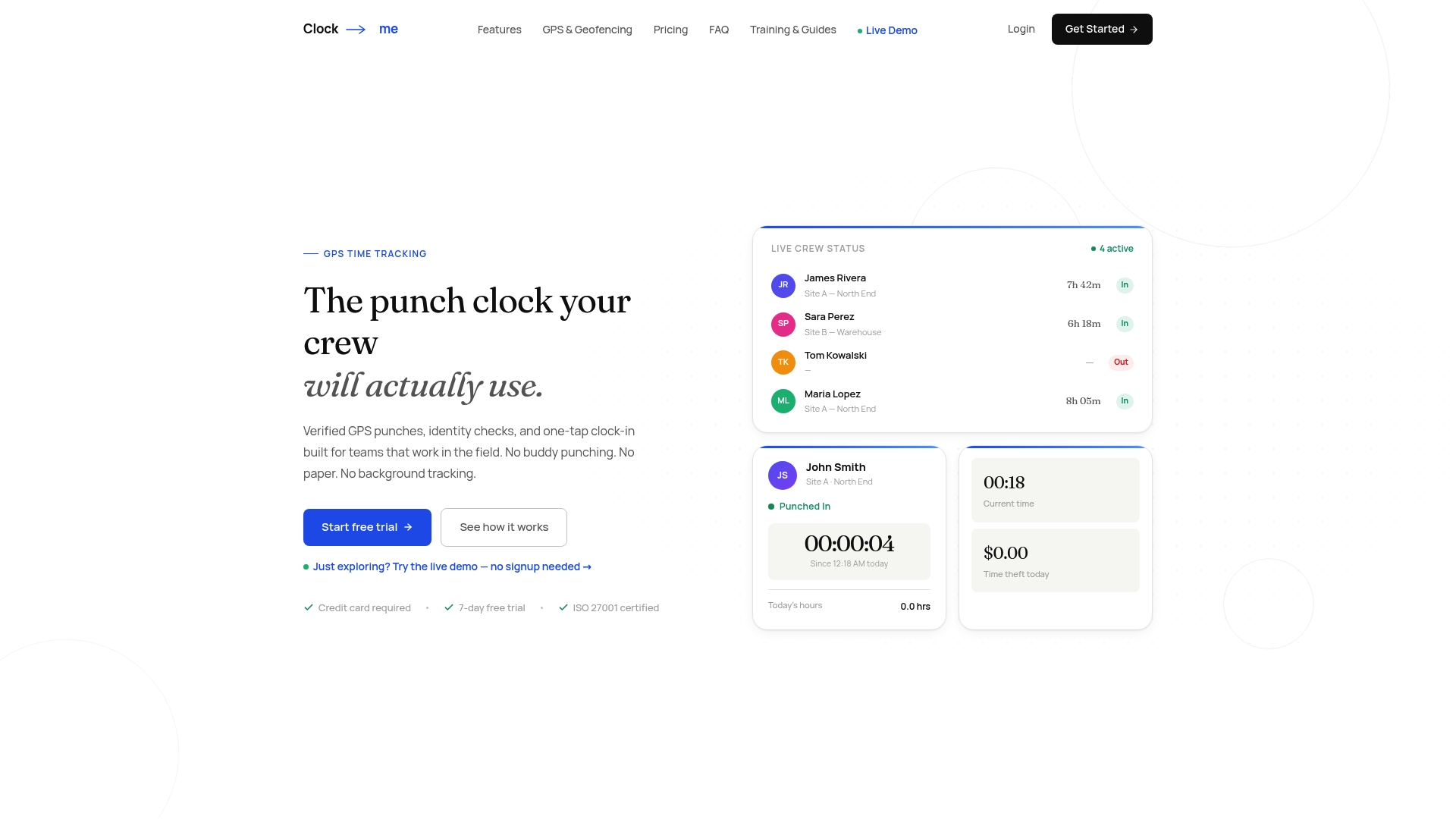
If you manage a small crew, the free plan is a low-risk way to see how verified clock-ins feel in practice. Start at clock-me.com and set up one team before rolling out to everyone.
We built Clock-Me on a simple belief: most buddy punching is a systems problem before it is a character problem. When the only clock is a shared tablet or an easy tap on any phone, honest people get pulled into covering for friends. Remove the opportunity and you remove the awkward favor.
That is why we pair a verified GPS punch with an identity check and geofencing, instead of relying on any one of them. Location shows where. Identity shows who. Device checks show whether the phone belongs to that person. Together they make a false punch visible at the moment it happens, when a manager can still fix it.
We also think accountability should not require surveillance. Our approach avoids continuous background tracking and uses random location check-ins and live dashboards to give supervisors the picture they need. Employees see a one-tap clock-in with no paperwork, and managers get records they can approve and export to payroll with confidence.
For teams in California, we added compliance features such as timecard attestation because accurate records are part of treating people fairly. Our goal is simple: everyone is paid for the time they actually work.
Clock-me
After the first month, review monthly. Browse the Clock-Me blog on GPS time tracking for setup ideas as your needs grow.
It means one employee clocks in or out on behalf of another, so the coworker looks present when they are not. It is a type of time theft because it can lead to pay for hours that were not worked.
Use a written policy plus verified clock-ins that check both location and identity. GPS stamps, geofences, photo or biometric checks and device-based detection each close a different gap. Then review exceptions weekly for repeating patterns.
It is dishonest and usually a fireable offense, and depending on the facts and state it can carry further consequences, so consult an attorney on a specific case. Federal rules require you to keep records of hours worked, so accurate punches protect your business as well.
Biometrics can work, but they raise privacy and consent questions that vary by jurisdiction. Many employers start with GPS, geofencing, photo checks and device-based detection, and consult counsel before adding biometric data.
A clear definition with examples, who it covers, how punches are verified, the consequences, an honest way to report a late arrival or correct a punch, and a signed acknowledgment. Enforce it the same way for everyone.